Spring HVAC Maintenance Checklist for Wentzville, MO Homeowners
Spring in Missouri is when HVAC systems transition from heating to cooling—often during big temperature swings and high pollen days. For homeowners in Wentzville, Lake Saint Louis, O’Fallon, Wright City, and St. Peters, a spring tune-up is less about “nice to have” and more about preventing early-season breakdowns, improving indoor air quality, and cutting electric bills before summer heat arrives.
Below is a data-rich, field-tested checklist you can use to prepare your system. If you’re working with a licensed technician, use this as a scope-of-work guide; if you’re a homeowner, it helps you understand what matters and what’s just upsell.
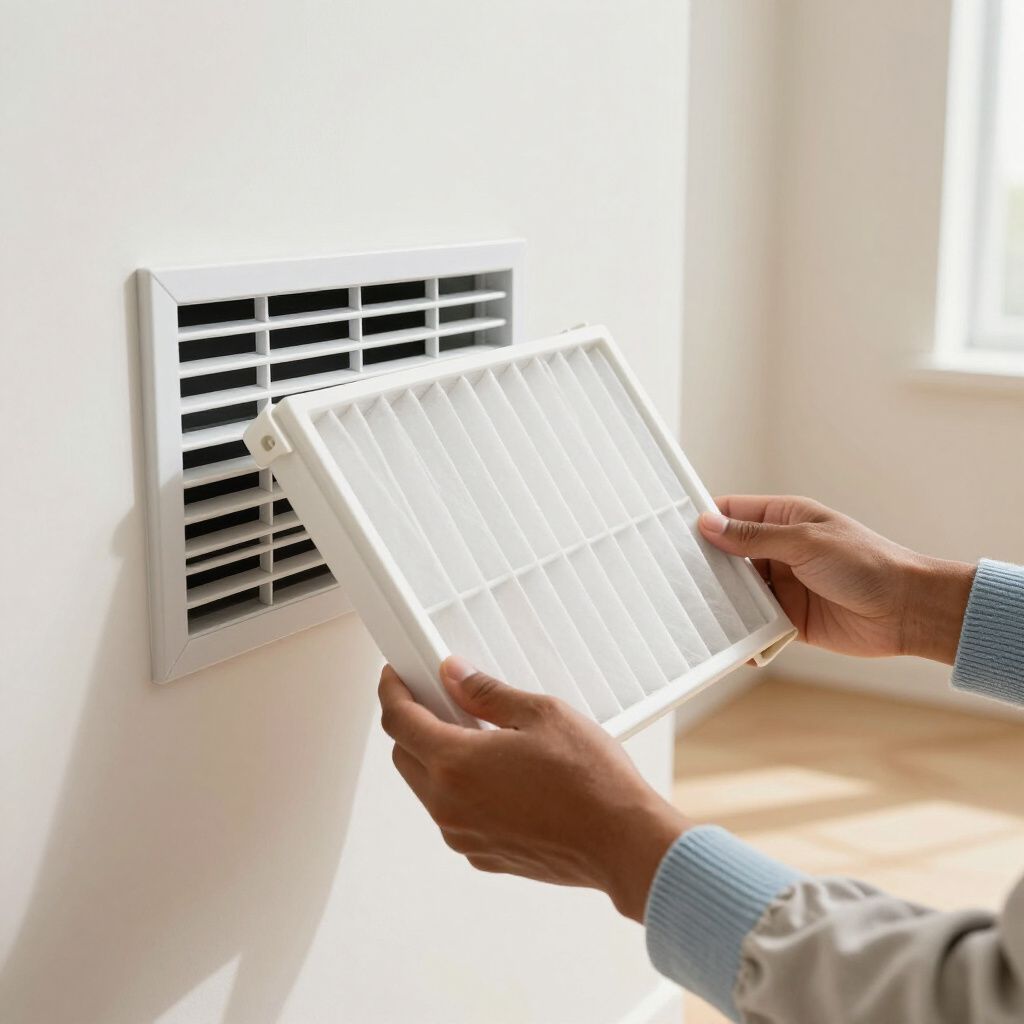
1) Replace or upgrade your air filter (and document it)
A clogged filter is one of the most common causes of reduced airflow and coil icing. Reduced airflow can also increase run time, which raises energy use and wear on the blower motor.
- Typical replacement interval: every 30–90 days (shorter during pollen season or with pets)
- What to record: filter size, MERV rating, install date, and next due date
- Pro tip: if allergies are a concern in Wentzville-area spring, ask about MERV 11–13 compatibility (not every system can handle higher resistance)
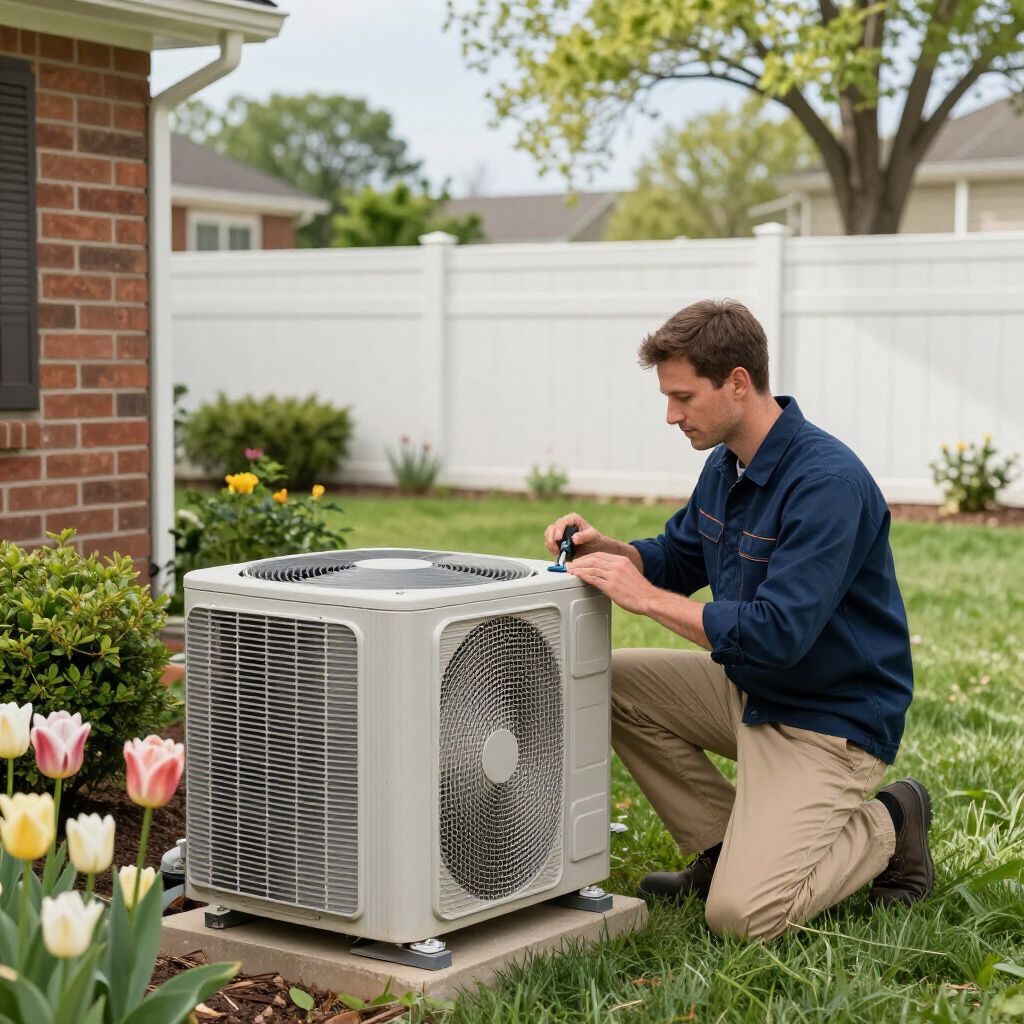
2) Clean the outdoor condenser coil and clear the pad
Outdoor units often collect cottonwood fuzz, grass clippings, and debris after winter. A dirty condenser coil can reduce heat transfer, increasing head pressure and compressor stress.
- Clearance target: 18–24 inches around the unit for airflow
- What to remove: leaves, mulch, weeds, and any winter covers (never run the unit covered)
- Rinse method: gentle hose rinse from the inside out when possible; avoid pressure washers that can flatten fins
3) Inspect the condensate drain, trap, and safety switch
Spring humidity increases the risk of algae/biofilm in the condensate line. A clogged drain can trigger overflow, water damage, or system shutdown.
- Common signs: water around the indoor unit, musty odors, intermittent cooling
- Ask your tech to verify: proper trap configuration (especially on negative-pressure systems)
- Best practice: test the float switch by gently lifting it to confirm the system shuts down safely
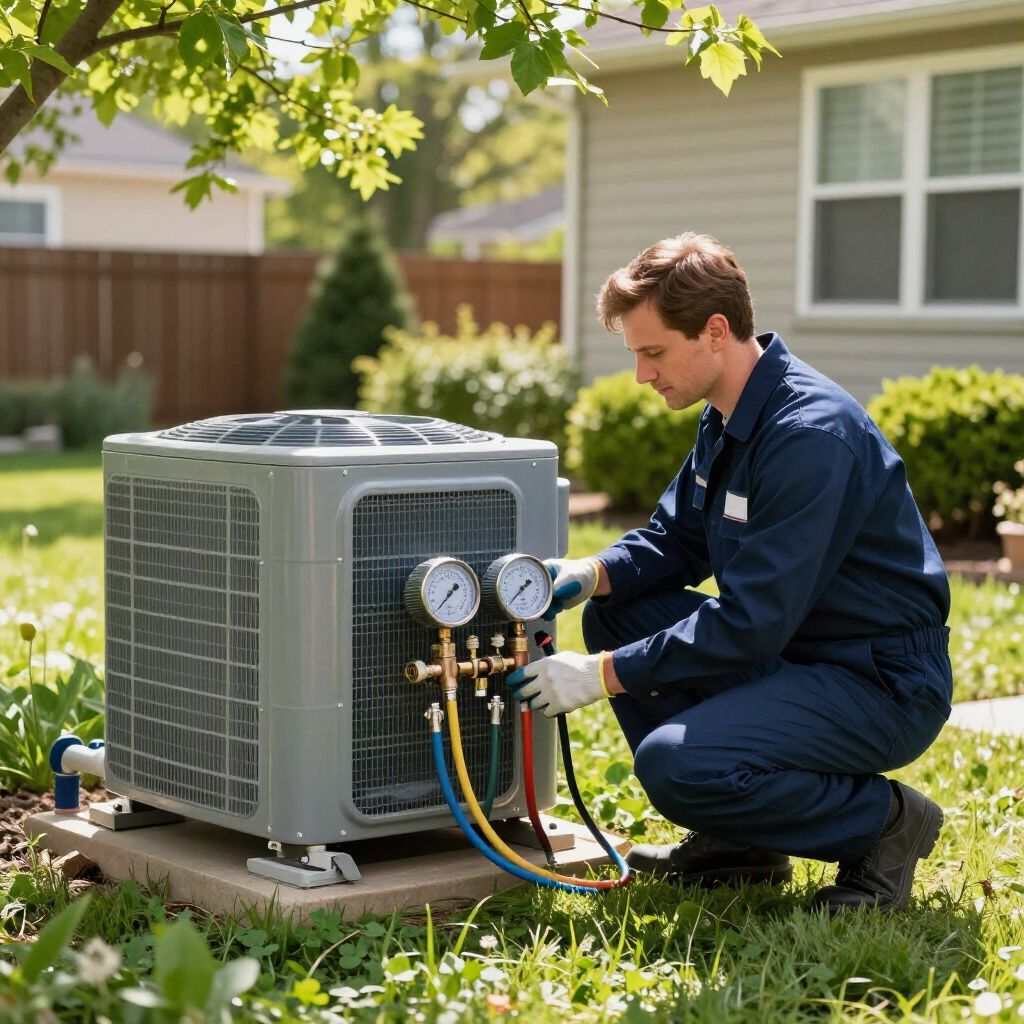
4) Verify refrigerant performance (don’t chase “top-offs”)
Refrigerant is not “consumed.” If levels are low, there’s usually a leak. Proper diagnostics include temperature split, subcooling/superheat, and confirmation that airflow is correct before interpreting pressures.
- Target concept: correct charge depends on manufacturer specs and metering device (TXV vs. fixed orifice)
- What to request: documented readings (ambient temp, supply/return temps, superheat/subcooling)
- Question to ask: “If it’s low, where is the leak and what’s the repair option?”
5) Measure temperature differential and airflow
A common diagnostic baseline is the supply-to-return temperature difference (often around 16–22°F in many normal conditions), but it varies with humidity, system type, and airflow. Airflow problems can mimic refrigerant issues.
- Simple homeowner check: confirm strong, consistent airflow from key vents
- Technician-level check: static pressure across the air handler to avoid blower stress
- Comfort improvement: balancing dampers and addressing duct restrictions can reduce hot/cold rooms
6) Test thermostat operation and consider scheduling strategy
Spring is ideal for verifying thermostat staging, heat pump changeover (if applicable), and scheduling. Smart thermostats can help, but only if equipment settings are correct.
- Verify: correct system type configuration (1-stage/2-stage, heat pump vs. furnace)
- Check: battery level (if applicable) and stable Wi‑Fi connectivity
- Energy tip: modest setpoint adjustments are often better than large setbacks that cause long recovery cycles
7) Don’t skip the “small parts” inspection
Many spring service calls are caused by inexpensive components that show warning signs before failure.
- Electrical: capacitor health, contactor pitting, wire tightness
- Mechanical: blower wheel cleanliness, bearings (if applicable)
- Safety: verify furnace safeties even if it’s warming up—especially before next heating season
Conclusion
If you’re in Wentzville, MO or nearby communities like O’Fallon, Lake Saint Louis, Wright City, and St. Peters, spring is the best time to get ahead of summer demand. A documented checklist helps you compare service quality, spot recurring issues, and keep your system efficient.
Want a professional tune-up? Ask for a written report with airflow, temperature split, and refrigerant performance readings—those numbers tell the real story of system health.
You might also like